Skip to content
Get in touch

24 of 24 stories

New Site for Neurofeedback Information: Neurofeedback.com

Neurofeedback.com is a new, free educational site about neurofeedback, QEEG and brain health, written for clinicians, researchers, patients and families. Alongside neurofeedback and QEEG it covers biofeedback, photobiomodulation, magnetic stimulation and PEMF. Its research coverage links to the original sources, and each article is labeled as a guide, research brief, news story or opinion. BrainMaster...

Article HealthDay · 17 February 2014

Kids With ADHD May Benefit From ‘Brain Wave’ Training in School

Coverage of the results of that Tufts trial, published in Pediatrics. 104 children with ADHD in 19 Boston-area elementary schools had neurofeedback, computer attention training or neither, in three 45-minute sessions a week. The neurofeedback group improved most in attention and executive function and kept the gains six months later, without the medication increases seen…

Press release Association for Psychological Science · 2 July 2013

Teens’ Self-Consciousness Linked With Specific Brain, Physiological Responses

In a study of 69 people aged 8 to 22, simply being told that a peer was watching them on camera inside an MRI scanner produced embarrassment, physical arousal and activity in the medial prefrontal cortex, all peaking in adolescence. Teenagers also showed a stronger link between that region and the striatum, which the authors…

Press release Newswise · 28 May 2013

Preventing ‘Traffic Jams’ in Brain Cells

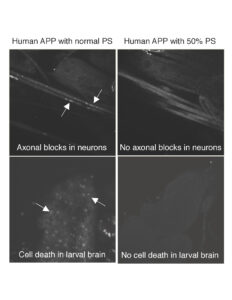
University at Buffalo biologists found that presenilin, a protein linked to Alzheimer's disease, helps control how fast materials travel along the internal 'highways' of nerve cells. In fruit-fly larvae, lowering presenilin cleared blockages and sped up transport, suggesting a possible way to prevent the pile-ups seen in neurodegenerative disease. The release includes a short video…

Article BBC News · 16 May 2013

Brain Stimulation Promises ‘Long-Lasting’ Maths Boost

Oxford researchers applied transcranial random noise stimulation, a mild electrical current through scalp electrodes, while 51 students practised arithmetic for five days. Compared with sham stimulation, it sped up learning, and the calculation gains were still there six months later. The researchers suggest it might one day help people with learning difficulties, stroke or neurodegenerative…

Press release Stanford Medicine · April 2013

Different Brains Have Similar Responses to Music

Stanford researchers scanned 17 adults with no musical training while they listened to unfamiliar baroque symphonies. Activity in brain areas for movement planning, memory and attention rose and fell in strikingly similar patterns from person to person, much less so for altered 'pseudo-music'. The authors suggest this shared response may help explain music's role in…

Video YouTube · 2013

Sufi Self-Piercing Monitored for Brainwaves

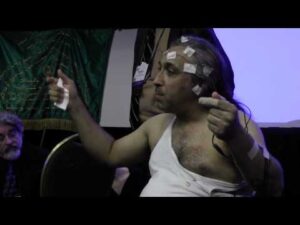
Video of a Sufi practitioner performing a self-piercing demonstration while his EEG was recorded, at the Association for Applied Psychophysiology and Biofeedback's annual meeting in Portland, supervised by Dr. Erik Peper and Dr. Howard Hall. It shows the changes in brain activity that accompanied this display of pain control. The recording was made with BrainMaster…

Warning: graphic content. The video shows a man pushing sharp blades and skewers into his body. He shows no sign of pain and does not bleed, but some viewers may find it disturbing.

Article Scientific American · 18 December 2012

The Neuroscience Lessons of Freestyle Rap

Neuroscientist Arne Dietrich comments on a brain-imaging study of rappers improvising lyrics compared with performing memorized ones. He welcomes the attempt to study creativity in a realistic task rather than artificial lab tests, explains what the scans showed, and cautions about how much a study like this can tell us about creativity in general.

Article The New York Times · 13 November 2012

Alzheimer’s Precursors Evident in Brain at Early Age

Studies of a large Colombian family with an inherited early-onset form of Alzheimer's found brain changes in carriers aged 18 to 26, more than 20 years before memory problems usually begin: raised amyloid in spinal fluid, memory areas working harder than normal, and signs that affected regions may be smaller. Researchers say this points to…

Article Medical Xpress · 12 November 2012

Meditation Produces Enduring Changes in Emotional Processing in the Brain

Researchers at Massachusetts General Hospital and Boston University found that after an eight-week meditation course, participants' amygdala reacted less to emotional images even when they were not meditating, and that different styles of meditation had somewhat different effects. It was the first evidence that meditation training changes emotional processing outside meditation itself.

Article ABA Journal · 1 November 2012

Brain Trials: Neuroscience Is Taking a Stand in the Courtroom

The American Bar Association's magazine looks at how brain science is entering criminal cases, from head injury and competency to brain scans offered as mitigating evidence. Using the case of a young man whose behaviour changed after a severe brain injury, it shows the gap between what neuroscience can explain and how courts decide responsibility.

Article MIT News · 29 October 2012

How the brain controls our habits

MIT neuroscientists found that a small region of the prefrontal cortex keeps moment-to-moment control over which habits are switched on, even for behaviour that runs on autopilot. Working in rats, they showed that this planning region can shut an ingrained habit off, which raises the possibility of treating disorders of overly habitual behaviour, such as…

Article Tufts Now · 9 October 2012

Your Brain on Video Games

Tufts University reports on a federally funded trial in Boston-area schools testing whether neurofeedback and computer attention training help children with ADHD. Lead researcher Naomi Steiner explains why schools were already buying such programs before there was good evidence for them, and describes early results suggesting they may help some children.

Article DailyGood · 15 September 2012

How to Trick Your Brain for Happiness

Psychologist Rick Hanson explains in plain language how repeated mental states shape the brain ('neurons that fire together wire together') and why the brain holds on to bad experiences more readily than good ones. He suggests deliberately lingering on positive experiences so that they leave a stronger trace.

Press release ScienceDaily · 15 August 2012

Previously Unknown Cleaning System in Brain Discovered

University of Rochester neuroscientists found a fast, pressurised system that flushes cerebrospinal fluid through the brain along channels around blood vessels, clearing away waste much as the lymphatic system does elsewhere in the body. They named it the glymphatic system. It was seen in mice using live two-photon imaging, and the team suggests it may…

Press release UCLA Health · 16 May 2012

UCLA researchers map damaged connections in Phineas Gage’s brain

UCLA researchers used modern brain-imaging data to rebuild the injury of Phineas Gage, the 19th-century railroad foreman who survived an iron rod passing through his head and whose personality changed afterwards. Their model shows that the damage to the white-matter connections between brain regions was far larger than the damage to the cortex itself, which…

Article NIMH · March 2012

Brain Wiring a No-Brainer?

An NIH-funded imaging study found that the brain's long-distance connections are laid out like a grid of city streets, with sheets of parallel fibres crossing at right angles, rather than as a tangle of wires. Van Wedeen of Massachusetts General Hospital describes the structure as consistent across scales, across people and across other primates.

Article BBC News · February 2010

Vegetative state patients can respond to questions

Scientists in Cambridge and Liège used brain scanning to communicate with a man thought to be in a vegetative state. Asked to imagine playing tennis for 'yes' and walking through his home for 'no', he answered questions correctly through the pattern of his brain activity, a finding that raised questions about how awareness is assessed…

Article The New York Times · 10 January 2010

The Americanization of Mental Illness

A New York Times Magazine essay by Ethan Watters arguing that, as Western and largely American ideas about mental illness spread around the world, they are changing how distress shows up and is treated in other cultures. Drawing on anthropologists and cross-cultural psychiatrists, it describes conditions that have been specific to particular times and places,…