BCIA Didactic Certification Course
Neurofeedback Bootcamp for Beginners
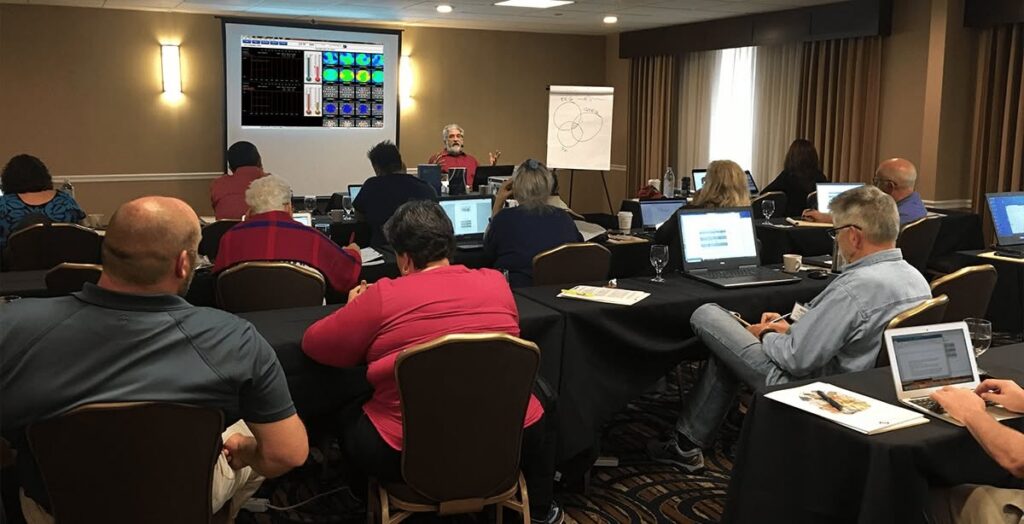
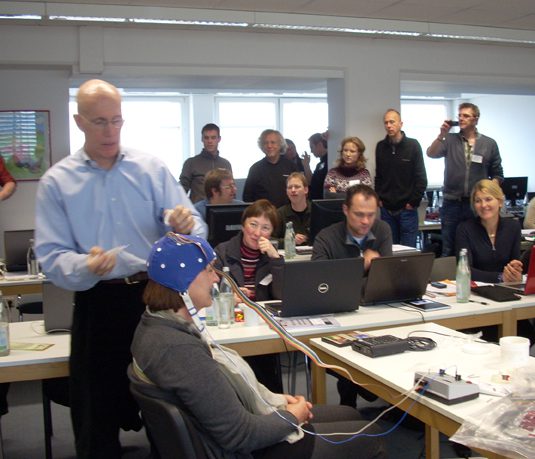
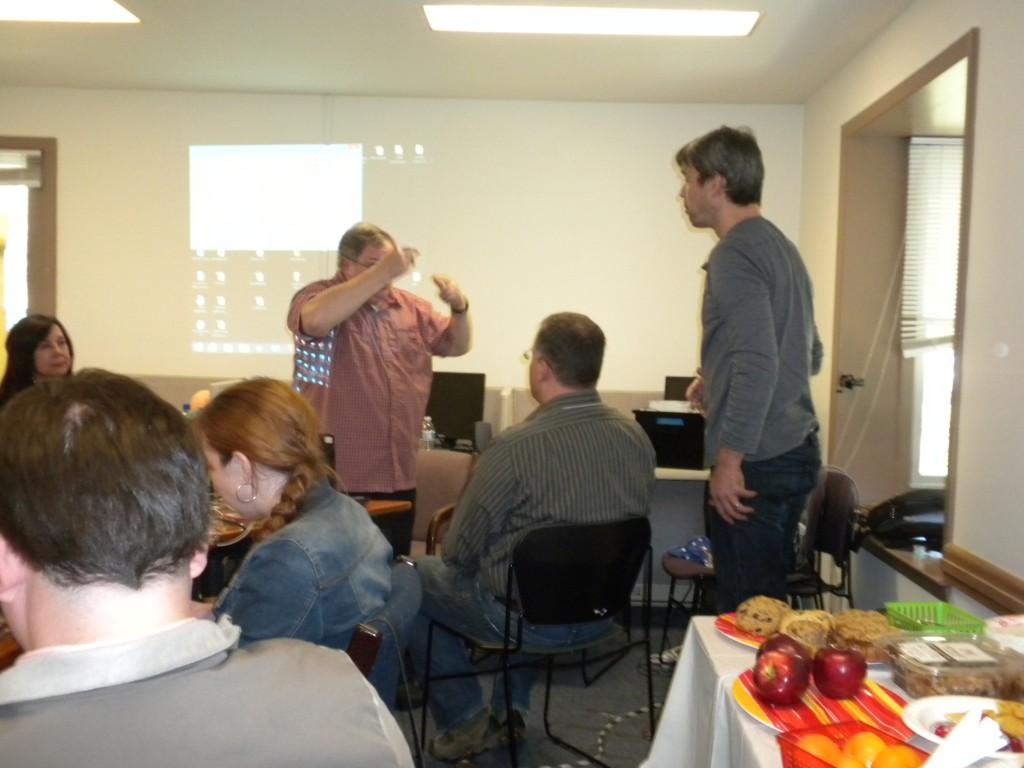
Whether you are looking to become familiar with neurofeedback or expand your existing knowledge, this course guides you through the basic steps that will improve and enhance your practice. It explores neurofeedback software and equipment, and brings to light current research and treatment techniques that have benefited clinicians worldwide — and it is the only bootcamp that introduces database guidance and live Z-score training.
Practitioners seeking BCIA certification can earn up to 36 credit hours by attending the full course.
Instructors
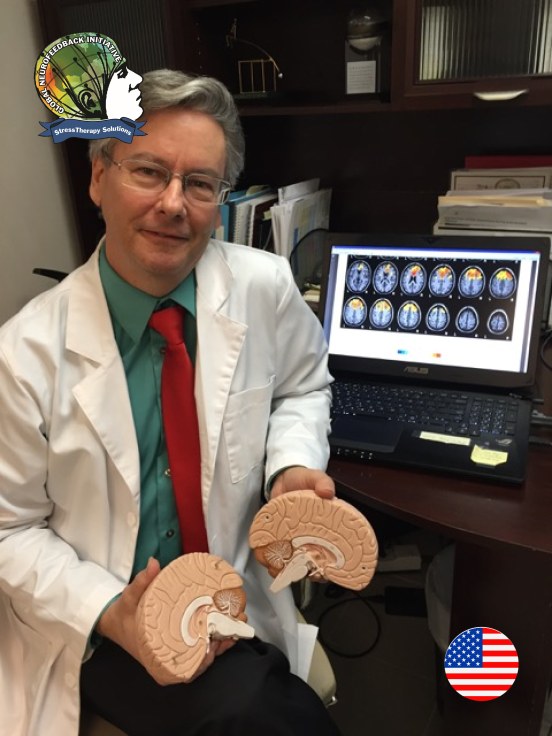
Richard McAlister
D.C., EEG/QEEG-D, BCN, D.A.A.P.M
Richard J. McAlister Dr. Richard J. McAlister is a Chiropractic Physician and has been in private practice since 1980. He…
Read bio →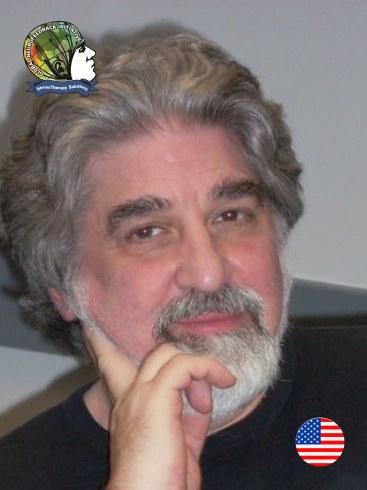
Thomas Collura
Ph.D., QEEG-D, BCN, LPCC-S
is the Founder and President of BrainMaster Technologies, Inc., and Clinical Director of the Brain Enrichment Center, Bedford, Ohio, and…
Read bio →Who is this workshop for?
- A beginner, post-doctoral-level course for Psychologists, Psychiatrists, Social Workers, MFTs, Counselors, Substance-Abuse Counselors, Nurses, Dentists, Chiropractors, technicians under licensed supervision, and other health-care professionals accepted by BCIA.
- Certain workshops may require prerequisite training/licensure — call STS for details.
- Medical doctors are welcome to attend all STS workshops (CMEs are not guaranteed).
This workshop counts toward BCIA certification or recertification (recertification is required every 4 years).
Educational objectives
By the end of this course, participants will be able to:
- Identify whether a client is suitable for neurofeedback.
- Describe the fundamentals of neurofeedback training.
- Explain how to use a relaxation protocol using neurofeedback specific to the client's presentation.
- Describe how to run a neurofeedback session with a client.
- Identify how to make necessary adjustments to a neurofeedback protocol that maximize positive outcomes based on the client's presenting symptoms.
- Contrast the conditions appropriate for neurofeedback training (e.g., anxiety, stress reduction, attentional difficulties) and when it is not appropriate.
- Explain how to construct an ongoing care plan using neurofeedback tailored to the client's needs.
- Describe various neurofeedback recording devices.
- Summarize the various approaches utilized in conducting neurofeedback.
- Differentiate the levels of scientific research.
- Specify the proper ethics as a neurofeedback provider.
- Identify the proper level of research power in studies.
- Define the various functions of cortical structures.
- Describe examples of the various contemporary methods of neurofeedback and stimulative interventions.
- Define the concept of neuroplasticity.
- Explain the 10-20 International Standard measurement for 19-channel EEG recording.
- Evaluate the various sources of non-cortical artifact.
- Analyze various methods of EEG assessment.
- Apply the steps in conducting a qEEG analysis.
- Describe the various frequency bands and qEEG components (e.g., coherence).
- Define the Peniston Protocol and its various utilization in neurofeedback.
- Describe the similarities and differences between traditional neurofeedback and Z-score and sLORETA neurofeedback.
- Differentiate relevant scope-of-practice issues (accuracy and utility of materials, empirical basis, limitations, and common risks).
- Identify pertinent client rights and standards of care.
Blueprint areas
BCIA Blueprint hours covered:
- Orientation to Neurofeedback — 4 hours
- Basic Neurophysiology & Neuroanatomy — 4 hours
- Instrumentation & Electronics — 4 hours
- Research Evidence Base for Neurofeedback — 2 hours
- Psychopharmacological Considerations — 2 hours
- Developing Treatment Protocols — 6 hours
- Treatment Implementation — 6 hours
- Ethical & Professional Conduct — 2 hours
- Current Trends in Neurofeedback — 2 hours
- Patient-Client Assessment — 4 hours
Itinerary
Day 1 10 CEs
- 8:00–10:00 AMOrientation to Neurofeedback: definitions, history, human learning (2 CEs)
- 10:10 AM–12:10 PMOrientation to Neurofeedback, continued (2 CEs)
- 1:10–3:10 PMBasic Neurophysiology & Neuroanatomy (2 CEs)
- 3:20–5:20 PMBasic Neurophysiology & Neuroanatomy, continued (2 CEs)
- 5:30–7:30 PMCurrent Trends in Neurofeedback (2 CEs)
Day 2 9 CEs
- 8:00–10:00 AMBasic Instrumentation & Electronics (2 CEs)
- 10:10 AM–12:10 PMBasic Instrumentation & Electronics, continued (2 CEs)
- 1:10–3:10 PMPatient-Client Assessment (2 CEs)
- 3:20–5:20 PMPatient-Client Assessment, continued (2 CEs)
- 5:30–6:30 PMResearch Evidence for Neurofeedback — Part 1 (1 CE)
Day 3 9 CEs
- 8:00–10:00 AMPsychopharmacological Considerations (2 CEs)
- 10:10 AM–12:10 PMDeveloping Treatment Protocols — Part 1 (2 CEs)
- 1:10–3:10 PMDeveloping Treatment Protocols — Part 2 (2 CEs)
- 3:20–5:20 PMDeveloping Treatment Protocols, continued (2 CEs)
- 5:30–6:30 PMResearch Evidence for Neurofeedback — Part 2 (1 CE)
Day 4 8 CEs
- 8:00–10:00 AMTreatment Implementation — Part 1 (2 CEs)
- 10:10 AM–12:10 PMTreatment Implementation, continued (2 CEs)
- 1:10–3:10 PMTreatment Implementation — Part 2 (2 CEs)
- 3:20–4:20 PMEthical & Professional Conduct — Part 1 (1 CE)
- 4:30–5:30 PMEthical & Professional Conduct — Part 2 (1 CE)
Important notices
- BCIA modules may be presented out of order.
- ADA needs: for any special requests, email/call Karen Newell — 707-321-0926, newell@sonic.net.
- CE & Commercial Support: please review the complete CE and conflict-of-interest disclosure information prior to registering.
- CUE Management Solutions, LLC does not have a relevant financial relationship with ineligible companies or other potentially biasing relationships to disclose to learners.
- CUE Management Solutions, LLC is approved by the American Psychological Association to sponsor continuing education for psychologists, and maintains responsibility for this program and its content (www.cue-mgmt.com).
- CUE Management Solutions, LLC is recognized by the New York State Education Department’s State Board for Psychology as an approved provider of continuing education for licensed psychologists #PSY-0242.
- APA credits are not guaranteed for any workshops.
- The science and information in the field of neurofeedback and qEEG is continually evolving; this course is regularly updated with new information as it evolves.
Disclosure Statement: Dr. McAlister — no conflict of interest or commercial support for the program. Dr. Collura — Owner/Employee/Founder of BrainMaster Technologies, Inc., Bedford, OH.
What to bring
A laptop, note-taking materials, and any questions from your practice.