EEG/QEEG Certification Course – 40 Hour Didactic Workshop
QEEG certification track — 40-hour didactic
Jan 21–22, 2027, 8:30 AM – 6:00 PM ET Days 4–5
This workshop, uniquely taught by five QEEG diplomates with diverse backgrounds, provides not only an opportunity to fulfill the QEEG Certification Board requirements, but also a broad and up-to-date exposure to the current state of EEG/QEEG and Neuromodulation/Neurofeedback. Attendees seeking EEG/QEEG board certification, as well as those already experienced in EEG/QEEG and neurofeedback, will find this a comprehensive and engaging workshop that includes the essential material to ensure a solid grasp of current EEG/QEEG concepts.
For experience levels: Introductory / Intermediate. Can be used for recertification.
Instructors
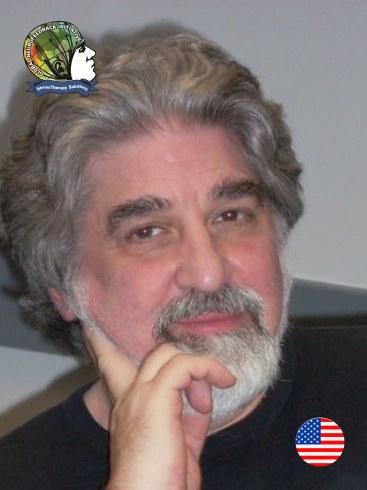
Thomas Collura
Ph.D., QEEG-D, BCN, LPCC-S
is the Founder and President of BrainMaster Technologies, Inc., and Clinical Director of the Brain Enrichment Center, Bedford, Ohio, and…
Read bio →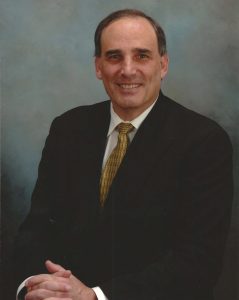
David Cantor
PhD., M.S, QEEG-D, BCN
Dr. David S. Cantor, Ph.D., M.Sc., QEEG-DL, BCN, FNAN is a globally recognized leader in neuroscience, quantitative electrophysiology, and clinical…
Read bio →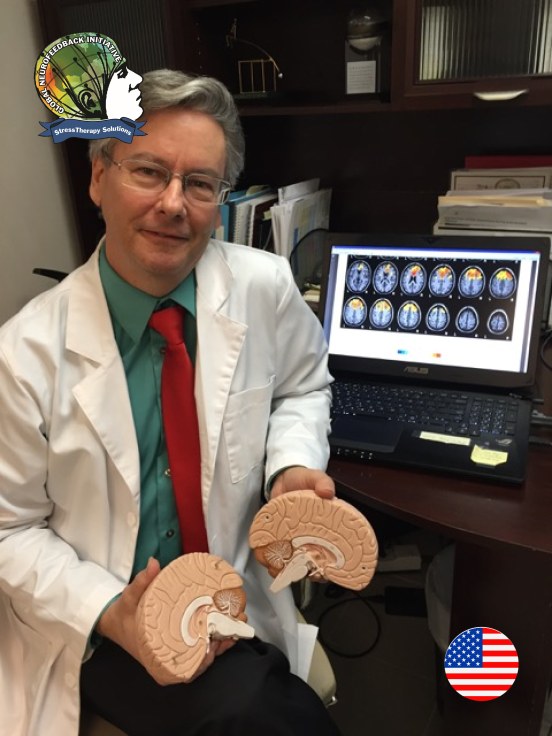
Richard McAlister
D.C., EEG/QEEG-D, BCN, D.A.A.P.M
Richard J. McAlister Dr. Richard J. McAlister is a Chiropractic Physician and has been in private practice since 1980. He…
Read bio →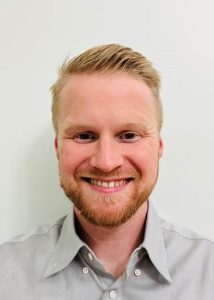
P. David Ims
M.A., QEEG-D
As a Licensed Clinical Professional Counselor, David provides psychotherapy and psychophysiological therapy to patients with a wide range of diagnosed…
Read bio →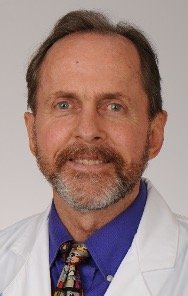
Robert Turner
MD, BCN, qEEG-D
Dr. Turner is a neurologist in private practice and Associate Professor of Clinical Pediatrics & Neurology at the University of…
Read bio →Who is this workshop for?
- This post-doctoral level course is for Psychologists, Psychiatrists, Social Workers, MFTs, Counselors, Substance Abuse Counselors, Nurses, Dentists, Chiropractors, technicians under licensed supervision, and other health care professionals accepted by BCIA.
- Certain workshops may require prerequisite training/licensure. Call STS for further information.
- Medical doctors are welcome to attend all STS workshops. CMEs are not guaranteed.
Educational objectives
By the end of this course, participants will be able to:
- Specify the relevant issues pertaining to scope of practice.
- Explain the difference between ethical rules and legal rules in clinical practice.
- Identify pertinent client rights and standards of care related to EEG monitoring.
- Contrast the ethical and legal considerations as an EEG or EEG/QEEG provider.
- Describe the physiological principles of the origins of the EEG in a client.
- Specify the differences between EEG and EEG/QEEG.
- Summarize the various approaches utilized in conducting EEG recording sessions.
- Describe the various frequency bands and EEG/QEEG components.
- Specify the Brodmann area functions and network connections.
- Explain the 10–20 International Standard placement for 19 channel EEG recording.
- Explain sources in the brain from which various frequency bands normally emanate, and their physiological basis.
- Identify at least 5 sources of noncortical biological artifact in the EEG.
- Indicate the developmental changes in the EEG.
- Specify the various functions of cortical structures.
- Contrast differences between t-tests, alpha and p levels, correlational relationships, and z-scores.
- Explain how clinically measured t-tests, alpha and p levels, correlational relationships, and z-score measures are used in EEG/QEEG as decision-making tools.
- Identify the concepts of Type I and Type II error, and power of a statistical test.
- Describe how to interact with a client to achieve an optimal EEG or EEG/QEEG recording.
- Identify how to make necessary adjustments or instructions during an EEG or EEG/QEEG recording session, depending on client response or observed recordings.
- Contrast the conditions identifiable using EEG with those identifiable when using EEG/QEEG.
- Describe the commonalities and differences in available EEG and EEG/QEEG recording devices and software.
- Identify the best subject inclusion and exclusion criteria for building a database.
- Explain the fundamental statistical considerations within EEG/QEEG databases.
- Distinguish the levels of experimental design in scientific research.
- Describe examples of the various contemporary methods of processing and displaying EEG/QEEG statistical data (maps, etc.).
- Explain how clinical presentation of a client may affect the EEG.
- Identify whether a client is suitable for an EEG or EEG/QEEG study.
- Describe the steps in conducting an EEG/QEEG analysis.
- Describe the use of Z-scores in EEG/QEEG analysis and interpretation.
- Indicate various methods of EEG assessment.
- Describe what EEG signatures should be referred out to other professionals.
- Demonstrate an understanding of LORETA interpretation and training along with limitations.
- Describe the concept of neuroplasticity in relation to the EEG and EEG/QEEG.
- Demonstrate knowledge about general cognitive and clinical changes that take effect after neurofeedback training based upon published scientific articles.
- Describe EEG connectivity metrics such as coherence, phase, and asymmetry.
- Explain phase and coherence, how they relate and what they can mean in the interpretation of the EEG/QEEG.
- Explain what defines the various EEG montages and the circumstances of their use.
- Describe how LORETA and sLORETA-based interpretation and training provide unique capabilities compared to surface metrics.
- Discuss a working knowledge of the montages, transforms and power displays along with the specific perspectives they can provide a reader of EEG/QEEG output.
- Explain how to ensure that an EEG recording session has minimal artifacts or interference.
- Create and construct a report on an EEG or EEG/QEEG session tailored to the client or referring practitioner’s needs.
- Distinguish various Neuromodulation therapies and modalities (e.g., Neurofeedback).
Itinerary
Day 1 8 CEs
- 8:00–9:00 AMHistory (1 hr): history of quantitative electrophysiology
- 9:00–11:00 AMEthics (2 hrs): responsibilities and liability in the provision of services
- 11:15 AM–12:15 PMTechnical (1 hr): topographical representation of EEG/QEEG; electrodes and acquisition systems
- 1:15–2:15 PMNeuroscience (1 hr): cortical and subcortical structures — macro and microanatomy
- 2:15–4:15 PMTechnical (2 hrs): instrumentation (acquisition and review parameters/settings); montages
- 4:30–5:30 PMEEG/QEEG (1 hr): what makes EEG/QEEG analysis unique; EEG/QEEG norms and how they are derived
Day 2 8 CEs
- 8:00–10:00 AMNeuroscience (2 hrs): behavioral correlates to brain regions and networks
- 10:15 AM–12:15 PMPsychopharmacology (2 hrs): drug/neurotransmitter modulation; half-lives; effects of psychopharmaceutical classes on EEG/QEEG
- 1:15–3:15 PMClinical / Forensic (2 hrs): reference-database limits; fact vs. expert witness; Daubert vs. Frye standards
- 3:30–5:30 PMEEG/QEEG (2 hrs): Brodmann areas; graph theory; current source density maps; correlating reports to clinical history
Day 3 8 CEs
- 8:00–9:00 AMNeuroscience (1 hr): cortical and subcortical structures — macro and microanatomy
- 9:00–11:00 AMEEG/QEEG (2 hrs): neurophysiology of EEG/QEEG; editing and identifying artifacts; normal waveforms; acquisition standards
- 11:15 AM–12:15 PMClinical (1 hr): correlating EEG/QEEG with other diagnostic evidence; appropriateness of referral
- 1:15–2:15 PMNeuroscience (1 hr): major networks
- 2:30–4:30 PMEEG/QEEG (2 hrs): functional correlates of abnormal changes; role of EEG/QEEG metrics in treatment
- 4:30–5:30 PMClinical / Forensic (1 hr): patient conditions related to EEG/QEEG evaluation; history and prior report review
Day 4 8 CEs
- 8:30–9:30 AMNeuroscience (1 hr): autonomic nervous system
- 9:30–11:30 AMEEG/QEEG (2 hrs): abnormal waveforms and rhythms; visual examination of traces; montages for waveform analysis
- 11:45 AM–12:45 PMTechnical (1 hr): montages; electrical/clinical safety
- 1:45–3:45 PMNeuroscience (2 hrs): sensory pathways
- 4:00–6:00 PMResearch (2 hrs): basic vs. clinical research; experimental design; statistics; validity and reliability; meta-analysis; publication standards
Day 5 8 CEs
- 8:30–10:30 AMEEG/QEEG (2 hrs): EEG/QEEG norms; functional correlates of abnormal changes; role of metrics in treatment
- 10:45 AM–12:45 PMEEG/QEEG (2 hrs): abnormal waveforms and rhythms; montages for waveform analysis
- 1:45–3:45 PMEEG/QEEG (2 hrs): current source density maps and metrics; correlating reports to clinical history and assessments
- 4:00–6:00 PMEEG/QEEG (2 hrs): abnormal waveforms and rhythms; montages for waveform analysis
Important notices
Disclosure statement:
- Dr. Turner, MD, Neurologist — no conflict of interest or commercial support for this program.
- Dr. Cantor, Clinical Licensed Psychologist — Founder & Clinical Director, Mind and Motion, LLC.
- Dr. Collura — Owner/Employee/Founder of BrainMaster Technologies, Inc., Bedford OH. All material taught is of a scientific and clinical nature.
- Mr. Ims, MA in Psychology — no conflict of interest or commercial support for this program.
- Dr. McAlister, DC — no conflict of interest or commercial support for this program.
The science and information in Neuromodulation/Neurofeedback and EEG/QEEG is continually evolving; this course is regularly updated with new information as it evolves.
- ADA needs: for any special requests, email/call Karen Newell — 707-321-0926, newell@sonic.net.
- CE & commercial support: please review the complete CE and conflict-of-interest disclosure information prior to registering.
- CUE Management Solutions, LLC does not have a relevant financial relationship with ineligible companies or other potentially biasing relationships to disclose to learners.
- CUE Management Solutions, LLC is approved by the American Psychological Association to sponsor continuing education for psychologists and maintains responsibility for this program and its content (www.cue-mgmt.com).
- APA credits are not guaranteed for any workshops.
What to bring
- Required: A laptop with a functional webcam. Your camera must remain on and present for the entire workshop.
- Recommended: Multiple monitors, so you can follow the presentation and work alongside it.
- Note-taking materials and any questions from your practice.