Info Resource

Info Resource Categories:

Scientific Articles

read more »

For what conditions is neurofeedback effective?

Neurofeedback, as a form of self-regulation, has broad application, and generally produces lasting results without the side effects associated with medications. Neurofeedback can help manage symptoms associated with the following conditions, among others: Depression, ADD/ADHD, Seizures, Migraines, Traumatic Brain Injury, Autism, Asperger’s Syndrome, Tourette’s Syndrome, Insomnia,

read more »

Is neurofeedback useful for self-improvement?

Neurofeedback has been successfully used for many applications in which there is no disorder.  These include: stress reduction peak performance mental fitness general relaxation training golf and sports improvement anti-aging

read more »

What is neurofeedback?

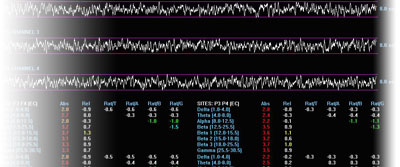
Neurofeedback is a form of biofeedback training that uses the EEG (Electroencephalogram) as the signal used to control feedback. Sensors applied to the trainee’s scalp record the brainwaves, which are converted into feedback signals by a human/machine interface using a computer and software. By using visual, sound, or tactile feedback to produce operant conditioning of the brain, [...]

read more »

How does neurofeedback work?

We do not know for certain how or why neurofeedback (EEG biofeedback) training actually works, but we believe that neurofeedback is a learning tool which motivates the mind to guide the brain into various levels of relaxation at the neuronal, or cellular, level by targeting and training alpha frequencies (in ratio to other brain frequencies [...]

read more »

Report from Tom Brownback regarding live Z-Score Training

From the point of view of perspective, I go back to a time several years ago at one of the last future health meetings in California. This was when we decided to partner in a joint venture between BrainMaster and Brownback Mason and Associates. At that point in time you agreed to provide me with [...]

read more »

Case Report: Live Z-Score training post-stroke

I would like to give a short report on a recent case with some good results: 62 old man, post (minimal)stroke (brainstem) state, from which he did fairly well recovered, then diagnosed with aneurysm frontal left (f7), after surgery 3 months ago wordfinding difficulties, lack of focus, more interior focus. we just had some multisite 4-channel [...]

read more »

Case Report: Z-Score practitioner Tom Brown comments re. ASD

I have been using Z-scores and the mini-Q EEG with just about all the kids that I have.  I have children on the spectrum  both in the US and India who I have been working with.  For those who come into the office, I almost always uses the Z-score training.  I have had some very [...]

read more »

Duke University report on ADHD and Neurofeedback long term effects

**** ATTENTION RESEARCH UPDATE **** **** July 2010 – Long-term effects of neurofeedback treatment for ADHD **** Dear Colleague, I hope that you are doing well. In this issue of Attention Research Update I review a recently published study that reviews 6-month follow-up results from a treatment study of neurofeedback. Examining the duration of neurofeedback [...]

read more »

EEG Biofeedback and Cognitive Rehabilitation for Traumatic Brain Injury

Australian Digital Theses Program Stephens, Joanne Victoria University 2006 Cognitive Rehabilitation is an umbrella term which encompasses a number of restorative and compensatory techniques commonly and widely applied to assist with the sequelae following traumatic brain injury (TBI). Such techniques have been well established within the literature. More recently, an increasing body of research has [...]

read more »